


You Are Here:Home > Information dynamics
> Industry trends
- [2026-09-08]
What is the function of trifluoroacetic acid
Trifluoroacetic acid (TFA, CF ∝ COOH) is a highly volatile perfluorinated organic acid with much stronger acidity than ordinary acetic acid. It is miscible with water and most organic solvents and is mainly used in organic synthesis, biomedicine, analytical chromatography, chemical engineering, and other fields. At the same time, it can be used to prepare downstream fluorine chemical intermediates
- [2026-09-04]
What should be noted during the use of fluororesin
Fluororesins (PTFE, PFA, FEP, PVDF, ETFE, etc.) are chemically resistant, weather resistant, and have low friction, but they have problems such as thermal decomposition toxicity, creep, and narrow processing windows. There are clear requirements for selection, processing, working conditions, storage, and disposal.
- [2026-08-25]
What are the applications of calcium bromide in the chemical industry
Calcium bromide is an inorganic bromide salt that is highly deliquescent. It is available in anhydrous, dihydrate, and 52% liquid form. Its core characteristics include high-density aqueous solution, low freezing point, bromide ion source, and strong hygroscopicity. It is widely used in oil and gas chemical industry, chemical industry, refrigeration, environmental protection, material synthesis, a
- [2026-08-18]
Where is potassium hydrogen fluoride used
Potassium hydrogen fluoride can stably release hydrogen fluoride and has the functions of fluorine source, acidic chelating agent, and melting aid. It belongs to Class 8 corrosive hazardous chemicals and is widely used in fluorine chemical industry, metal surface treatment, glass processing, electronic manufacturing, and organic synthesis.
- [2026-08-11]
What should be noted when using potassium fluorosilicate
Potassium fluorosilicate belongs to toxic fluorine-containing powders, which release corrosive and toxic smoke when exposed to acid and high temperature. The core of operation revolves around dust prevention, contact prevention, staying away from acid and high temperature, and standardized waste liquid disposal.
- [2026-08-04]
In which industries is sodium hydrogen fluoride used
Sodium hydrogen fluoride is an acidic fluoride salt that can smoothly release fluoride ions and has the characteristics of acidic etching, complex rust removal, and melting aid; Compared to liquid hydrofluoric acid, solid form is more convenient for storage and transportation, and is widely used as an etchant, metal surface treatment agent, fluorine chemical intermediate, and welding melting aid r
Website Navigation
Contact Us
- Company Address: Fluorination Technology Park, Changshu City, Jiangsu Province
- Service Hotline: 0512-52818267
- Technical Consultation: 0512-52626090
- Contact phone number: 13601573215
- Company email: 13601573215@163.com

Copyright © 2023 Changshu Hongjia Fluorine Technology Co., Ltd All Rights Reserved www.hongjiafu.net 苏ICP备11048419号-2  苏公网安备32058102001807号 Technical Support:Lange
苏公网安备32058102001807号 Technical Support:Lange
+
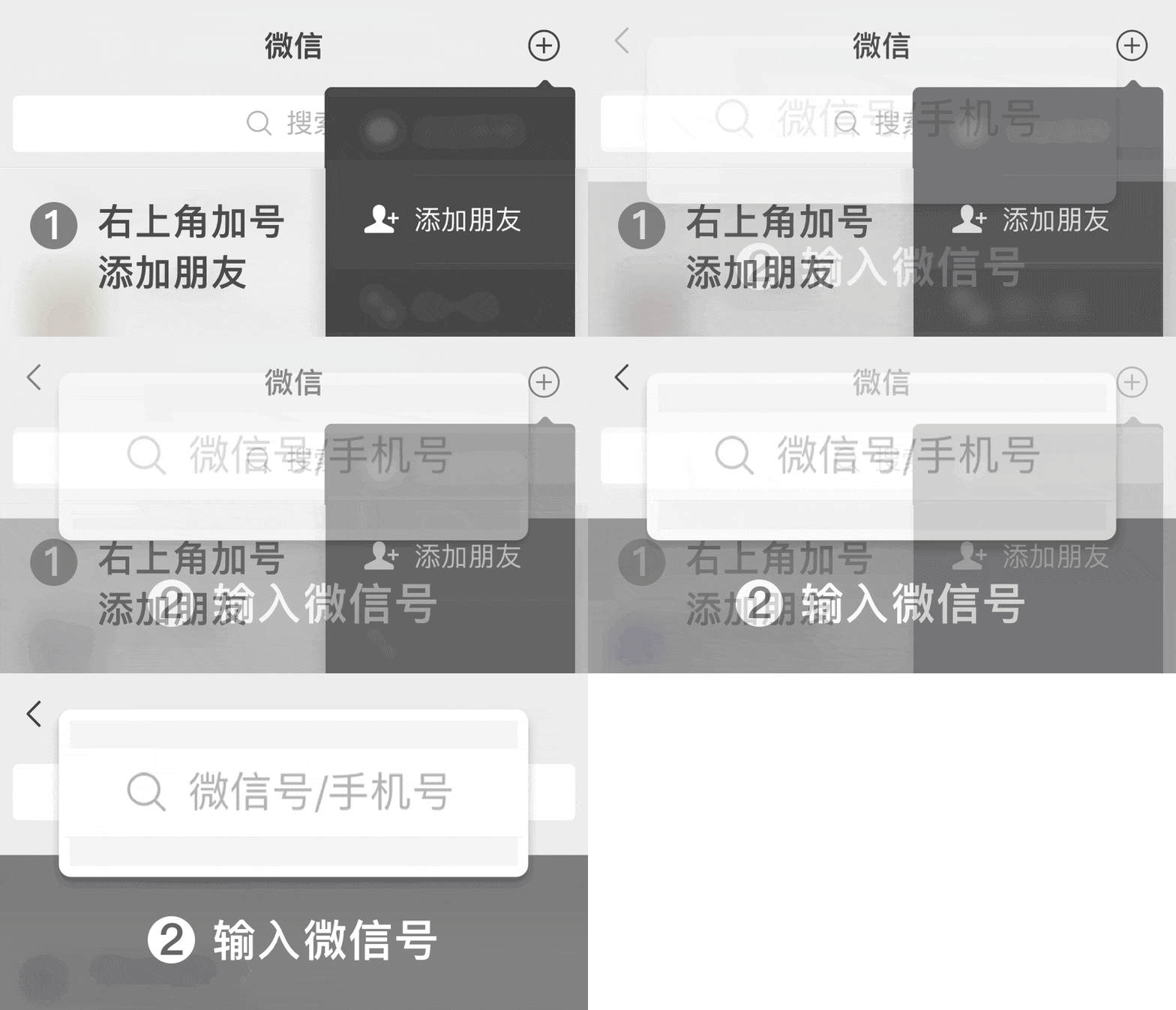
 wechat number:Zz5203520
wechat number:Zz5203520
 Home
Home
 WeChat
 Tell
Tell