


You Are Here:Home > Information dynamics
- [2026-08-11]
What should be noted when using potassium fluorosilicate
Potassium fluorosilicate belongs to toxic fluorine-containing powders, which release corrosive and toxic smoke when exposed to acid and high temperature. The core of operation revolves around dust prevention, contact prevention, staying away from acid and high temperature, and standardized waste liquid disposal.
- [2026-08-04]
In which industries is sodium hydrogen fluoride used
Sodium hydrogen fluoride is an acidic fluoride salt that can smoothly release fluoride ions and has the characteristics of acidic etching, complex rust removal, and melting aid; Compared to liquid hydrofluoric acid, solid form is more convenient for storage and transportation, and is widely used as an etchant, metal surface treatment agent, fluorine chemical intermediate, and welding melting aid r
- [2026-07-28]
Where is bromoacetic acid mainly used
Bromoacetic acid belongs to highly active alpha halogenated carboxylic acids, with core functions as a carboxymethylation reagent and organic alkylating intermediate. Bromine atoms are prone to nucleophilic substitution and are key basic raw materials in chemical engineering.
- [2026-07-23]
What is potassium tetraborate briefly introduced
1、 Basic physical and chemical properties The appearance is white crystals or crystalline powder; Easy to dissolve in water, slightly soluble in alcohol, the aqueous solution is weakly alkaline (pH ≈ 9.2 in 2% aqueous solution), and has excellent buffering capacity; The melting point of anhydrous material is 815 ℃, and metal oxides can be melted and dissolved at high temperatures.
- [2026-07-15]
What is the main function of calcium fluoride
1、 Fluorine chemical industry The core raw material for preparing hydrofluoric acid. Calcium fluoride reacts with concentrated sulfuric acid to produce anhydrous hydrofluoric acid; Hydrofluoric acid extends further downwards:
- [2026-07-07]
What are the preparation methods of tetrafluoropropanol
1、 Free radical polymerization of tetrafluoroethylene and methanol 1. Intermittent polymerization in high-pressure reactors (traditional large-scale production) Raw materials: Tetrafluoroethylene (TFE), anhydrous methanol, peroxide free radical initiator (diisopropyl peroxydicarbonate, di tert butyl peroxide)
Website Navigation
Contact Us
- Company Address: Fluorination Technology Park, Changshu City, Jiangsu Province
- Service Hotline: 0512-52818267
- Technical Consultation: 0512-52626090
- Contact phone number: 13601573215
- Company email: 13601573215@163.com

Copyright © 2023 Changshu Hongjia Fluorine Technology Co., Ltd All Rights Reserved www.hongjiafu.net 苏ICP备11048419号-2  苏公网安备32058102001807号 Technical Support:Lange
苏公网安备32058102001807号 Technical Support:Lange
+
 wechat number:Zz5203520
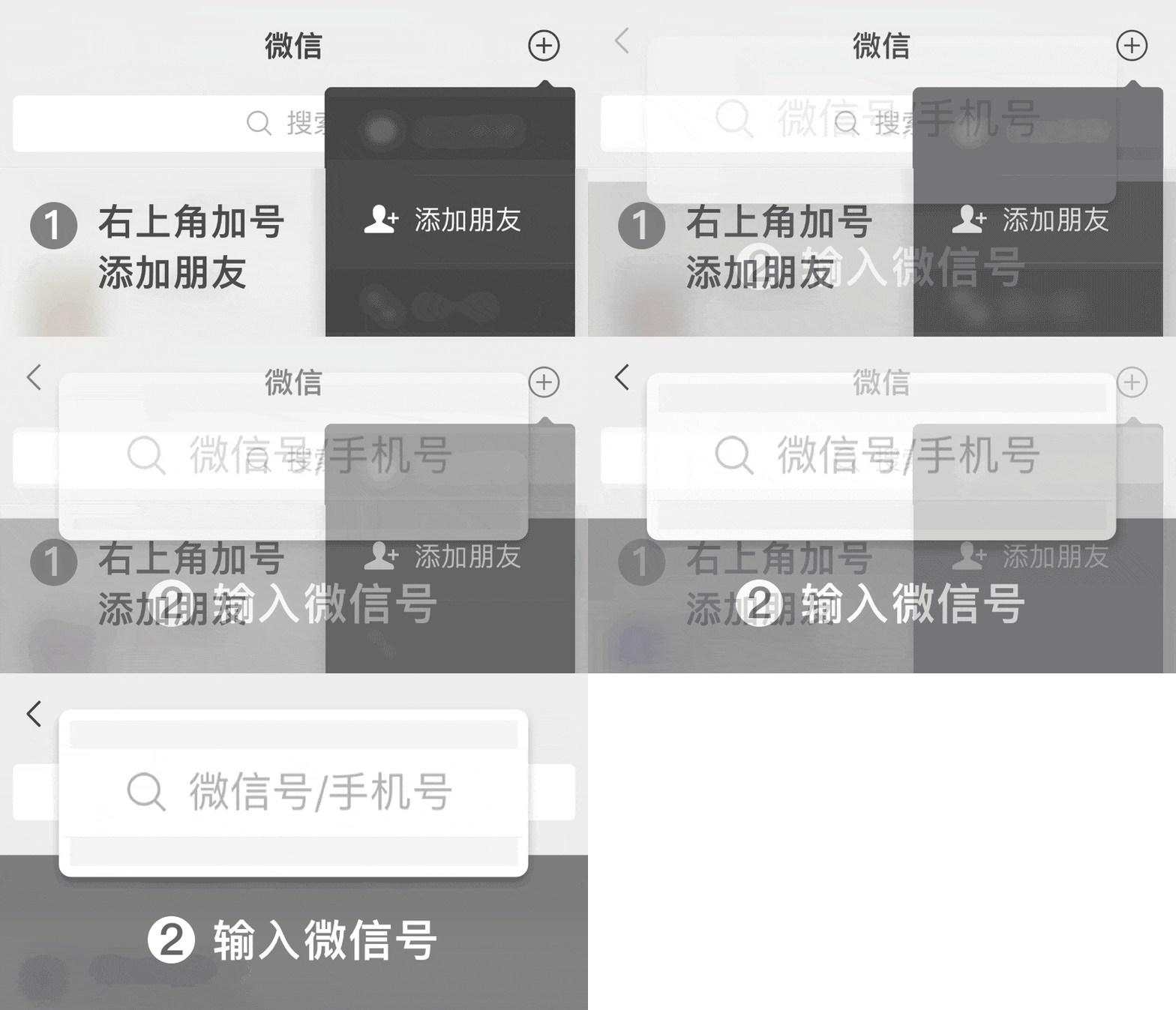
wechat number:Zz5203520
 Home
Home
 WeChat
 Tell
Tell