


You Are Here:Home > Information dynamics
> Industry trends
What are the characteristics of ammonium hydrogen fluoride
info:www.hongjiafu.net | Release time:2026-05-11
The core characteristics of ammonium hydrogen fluoride (NH ₄ HF ₂) include easy deliquescence, strong acidity in aqueous solution, ability to corrode glass, easy decomposition under heat, and strong toxicity and corrosion.
1、 Physical characteristics
Appearance: White/colorless transparent orthorhombic crystal, often in the form of flakes, with a slight sour taste.
Deliquescence: It is highly susceptible to moisture absorption and clumping in the air, and needs to be sealed and stored.
Solubility: Very soluble in cold water (about 630g/L at 20 ℃), slightly soluble in ethanol, insoluble in ether; Decompose in hot water.
Density/melting point: density 1.50g/cm ³; Melting point 125.6 ℃, boiling point about 240 ℃, can sublime at high temperatures.
2、 Chemical characteristics
Strong acidity: The aqueous solution exhibits strong acidity (1mol/L pH ≈ 1.5) and can slowly release HF.
Corrosivity: Corrosive to glass/ceramics (reacting with SiO ₂), aluminum, iron and other metals; Strong corrosion to skin/mucous membranes.
Thermal instability:>120 ℃ or decomposes into NH3 and HF when exposed to hot water.
Structure: Composed of NH ₄⁺ and HF ₂⁻ (strong hydrogen bonds), it has high chemical activity.
3、 Safety features
Toxicity: Toxic, inhalation/contact can cause skin burns, eye damage, long-term exposure or fluorosis.
Hazard: GHS is classified as highly corrosive, toxic, and requires protection against contact and inhalation.
4、 Main purpose
Glass etching/sanding, silicon wafer cleaning, metal surface treatment (aluminum profile oxidation).
Analytical reagents, preservatives, ceramic/enamel additives, organic synthetic fluorinating agents.
5、 Key points of storage and transportation
Sealed, cool, dry storage, away from heat sources, water sources, and alkaline substances; Avoid glass containers.
1、 Physical characteristics
Appearance: White/colorless transparent orthorhombic crystal, often in the form of flakes, with a slight sour taste.
Deliquescence: It is highly susceptible to moisture absorption and clumping in the air, and needs to be sealed and stored.
Solubility: Very soluble in cold water (about 630g/L at 20 ℃), slightly soluble in ethanol, insoluble in ether; Decompose in hot water.
Density/melting point: density 1.50g/cm ³; Melting point 125.6 ℃, boiling point about 240 ℃, can sublime at high temperatures.
2、 Chemical characteristics
Strong acidity: The aqueous solution exhibits strong acidity (1mol/L pH ≈ 1.5) and can slowly release HF.
Corrosivity: Corrosive to glass/ceramics (reacting with SiO ₂), aluminum, iron and other metals; Strong corrosion to skin/mucous membranes.
Thermal instability:>120 ℃ or decomposes into NH3 and HF when exposed to hot water.
Structure: Composed of NH ₄⁺ and HF ₂⁻ (strong hydrogen bonds), it has high chemical activity.
3、 Safety features
Toxicity: Toxic, inhalation/contact can cause skin burns, eye damage, long-term exposure or fluorosis.
Hazard: GHS is classified as highly corrosive, toxic, and requires protection against contact and inhalation.
4、 Main purpose
Glass etching/sanding, silicon wafer cleaning, metal surface treatment (aluminum profile oxidation).
Analytical reagents, preservatives, ceramic/enamel additives, organic synthetic fluorinating agents.
5、 Key points of storage and transportation
Sealed, cool, dry storage, away from heat sources, water sources, and alkaline substances; Avoid glass containers.
Prev:
Briefly introduce ammonium fluorosilicate
Next:
What is the function of anhydrous potassium fluor…
【Related articles】
Website Navigation
Contact Us
- Company Address: Fluorination Technology Park, Changshu City, Jiangsu Province
- Service Hotline: 0512-52818267
- Technical Consultation: 0512-52626090
- Contact phone number: 13601573215
- Company email: 13601573215@163.com

Copyright © 2023 Changshu Hongjia Fluorine Technology Co., Ltd All Rights Reserved www.hongjiafu.net 苏ICP备11048419号-2  苏公网安备32058102001807号 Technical Support:Lange
苏公网安备32058102001807号 Technical Support:Lange
+
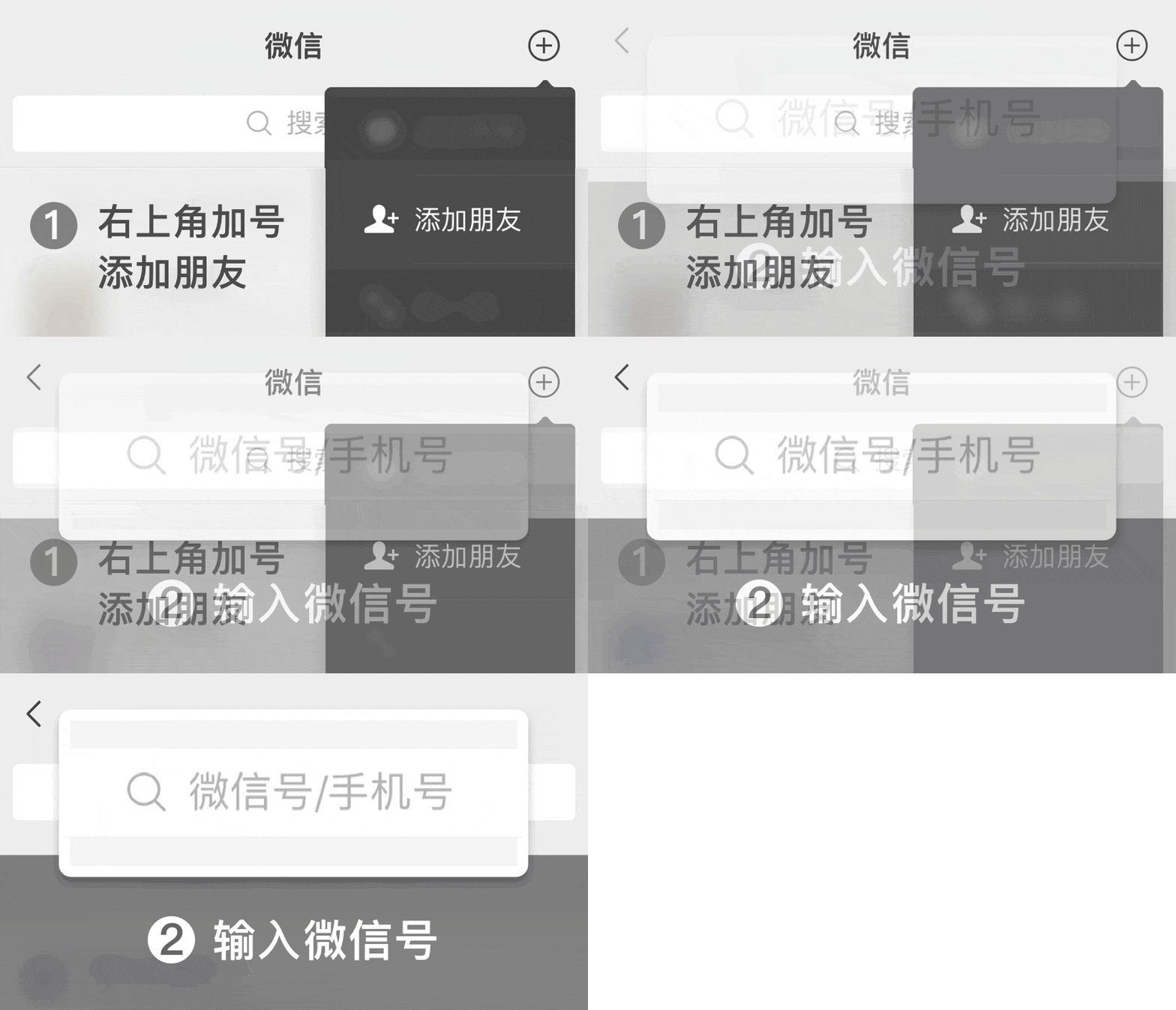
 wechat number:Zz5203520
wechat number:Zz5203520
 Home
Home
 WeChat
 Tell
Tell