


You Are Here:Home > Information dynamics
> Industry trends
What are the characteristics of ammonium fluorozirconate
info:www.hongjiafu.net | Release time:2026-05-26
Ammonium fluorozirconate, with core characteristics of high water solubility, stable complexation, acid passivation, controllable thermal decomposition, acid stability and alkali sensitivity, low toxicity and corrosiveness, is a key zirconium salt for metal surface treatment, ceramics/glass, and metallurgy.
1、 Basic physical and chemical characteristics
Appearance: White/colorless diamond/hexagonal crystal, high-purity product (≥ 98%) pure white, odorless.
Solubility: Very soluble in water (about 288g/L at 20 ℃), the solution is weakly acidic; Insoluble in organic solvents such as ethanol and acetone.
Density: 1.15g/mL (25 ℃), molecular weight: 241.29.
Crystal structure: Triangular/hexagonal crystal system, composed of stable ZrF ₆² ⁻ complex anions and NH ₄⁺, with a complexation stability constant logK>20, and not easily dissociated at room temperature.
2、 Chemical stability characteristics
Stable at room temperature: no deliquescence or oxidation in the air, sealed and protected from light for long-term storage.
Controllable thermal decomposition: slow decomposition at 100 ° C, significant decomposition at 200-300 ° C, generating zirconium fluoride (ZrF ₄), NH3 HF, No residual impurities, suitable for the preparation of high-purity zirconium compounds.
Acid base selectivity:
Acid resistant: Stable in dilute hydrochloric acid and sulfuric acid, only slowly hydrolyzed.
Afraid of alkali: When exposed to strong alkali (NaOH), it decomposes and forms Zr (OH) ₄ precipitate+NH3.
Mild hydrolysis: Room temperature hydrolysis of aqueous solution is extremely slow (half-life of several weeks), accelerated by high temperature/high pH, and releases trace amounts of HF.
3、 Core functional characteristics (industrial value)
Strong metal passivation: Water solution forms a dense ZrO ₂ - F ⁻ composite passivation film on the surfaces of aluminum, zinc, steel, and magnesium, increasing corrosion resistance by 3-10 times; Chromium free passivation core material, a more environmentally friendly alternative to chromate.
Ceramic/glass melting aid+opalescence: reduces sintering temperature and enhances glaze gloss; As an emulsifying agent, it gives glass/ceramics a white and turbid texture, with better stability than sodium fluorosilicate.
Metallurgical purification: Smelting light metals (aluminum, magnesium) as penetrants/impurities to remove silicon and iron impurities, improve metal purity and mechanical properties.
Catalyst precursor: Preparation of ZrF ₄, high-purity zirconium powder, zirconium based catalysts for organic synthesis and petroleum cracking.
4、 Safety and environmental characteristics
Corrosivity: The aqueous solution contains trace amounts of HF, which corrodes glass and ceramic containers and requires PE/PP material equipment.
Environmentally friendly: chromium free, low in heavy metals, easy to treat wastewater (precipitation of fluoride ions with lime), compliant with RoHS and REACH.
1、 Basic physical and chemical characteristics
Appearance: White/colorless diamond/hexagonal crystal, high-purity product (≥ 98%) pure white, odorless.
Solubility: Very soluble in water (about 288g/L at 20 ℃), the solution is weakly acidic; Insoluble in organic solvents such as ethanol and acetone.
Density: 1.15g/mL (25 ℃), molecular weight: 241.29.
Crystal structure: Triangular/hexagonal crystal system, composed of stable ZrF ₆² ⁻ complex anions and NH ₄⁺, with a complexation stability constant logK>20, and not easily dissociated at room temperature.
2、 Chemical stability characteristics
Stable at room temperature: no deliquescence or oxidation in the air, sealed and protected from light for long-term storage.
Controllable thermal decomposition: slow decomposition at 100 ° C, significant decomposition at 200-300 ° C, generating zirconium fluoride (ZrF ₄), NH3 HF, No residual impurities, suitable for the preparation of high-purity zirconium compounds.
Acid base selectivity:
Acid resistant: Stable in dilute hydrochloric acid and sulfuric acid, only slowly hydrolyzed.
Afraid of alkali: When exposed to strong alkali (NaOH), it decomposes and forms Zr (OH) ₄ precipitate+NH3.
Mild hydrolysis: Room temperature hydrolysis of aqueous solution is extremely slow (half-life of several weeks), accelerated by high temperature/high pH, and releases trace amounts of HF.
3、 Core functional characteristics (industrial value)
Strong metal passivation: Water solution forms a dense ZrO ₂ - F ⁻ composite passivation film on the surfaces of aluminum, zinc, steel, and magnesium, increasing corrosion resistance by 3-10 times; Chromium free passivation core material, a more environmentally friendly alternative to chromate.
Ceramic/glass melting aid+opalescence: reduces sintering temperature and enhances glaze gloss; As an emulsifying agent, it gives glass/ceramics a white and turbid texture, with better stability than sodium fluorosilicate.
Metallurgical purification: Smelting light metals (aluminum, magnesium) as penetrants/impurities to remove silicon and iron impurities, improve metal purity and mechanical properties.
Catalyst precursor: Preparation of ZrF ₄, high-purity zirconium powder, zirconium based catalysts for organic synthesis and petroleum cracking.
4、 Safety and environmental characteristics
Corrosivity: The aqueous solution contains trace amounts of HF, which corrodes glass and ceramic containers and requires PE/PP material equipment.
Environmentally friendly: chromium free, low in heavy metals, easy to treat wastewater (precipitation of fluoride ions with lime), compliant with RoHS and REACH.
Prev:
In which industries is ethyl nonafluorobutyl ethe…
Next:
Briefly introduce ammonium fluorosilicate
【Related products】

Website Navigation
Contact Us
- Company Address: Fluorination Technology Park, Changshu City, Jiangsu Province
- Service Hotline: 0512-52818267
- Technical Consultation: 0512-52626090
- Contact phone number: 13601573215
- Company email: 13601573215@163.com

Copyright © 2023 Changshu Hongjia Fluorine Technology Co., Ltd All Rights Reserved www.hongjiafu.net 苏ICP备11048419号-2  苏公网安备32058102001807号 Technical Support:Lange
苏公网安备32058102001807号 Technical Support:Lange
+
 wechat number:Zz5203520
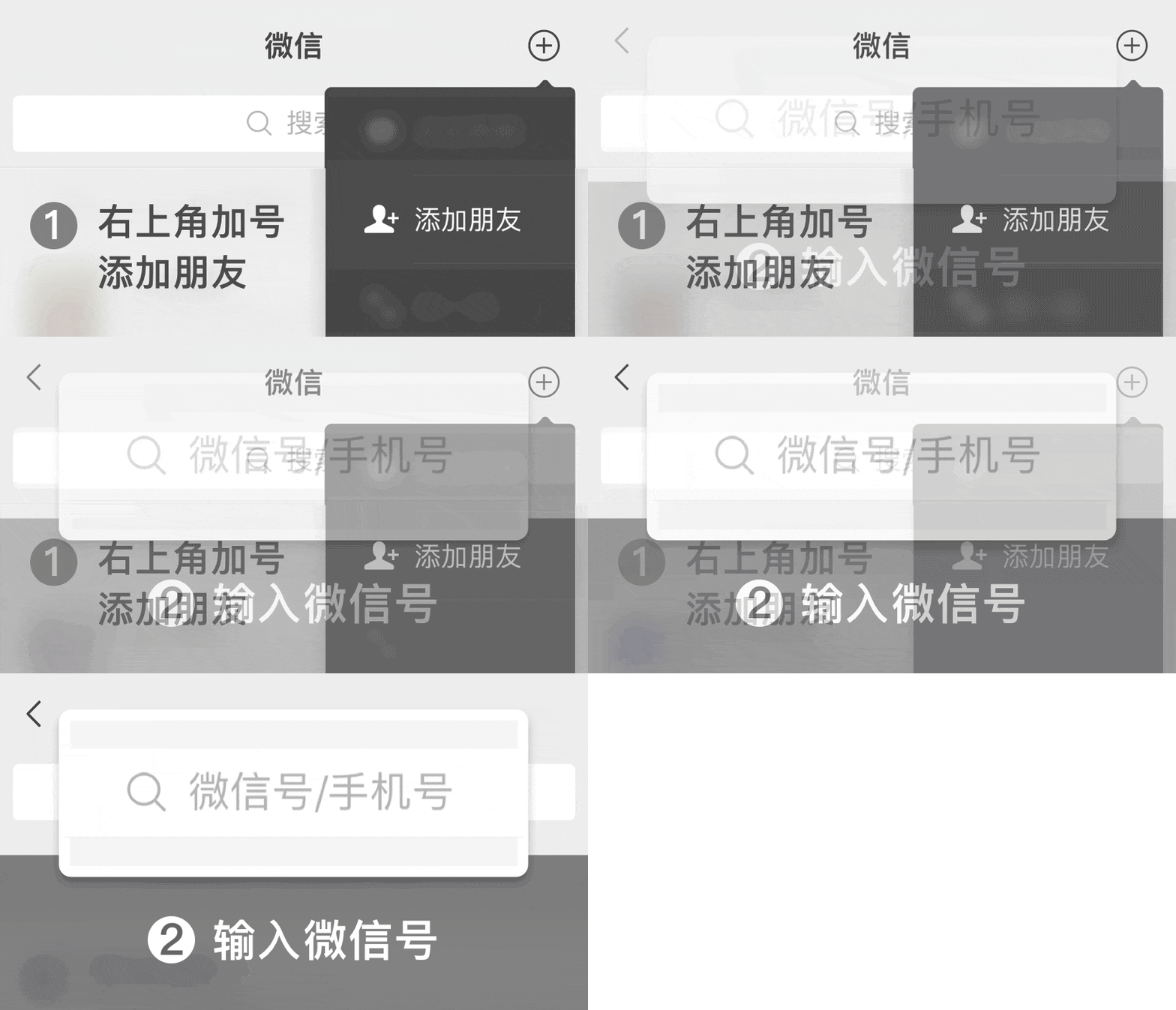
wechat number:Zz5203520
 Home
Home
 WeChat
 Tell
Tell