Sodium Bromide
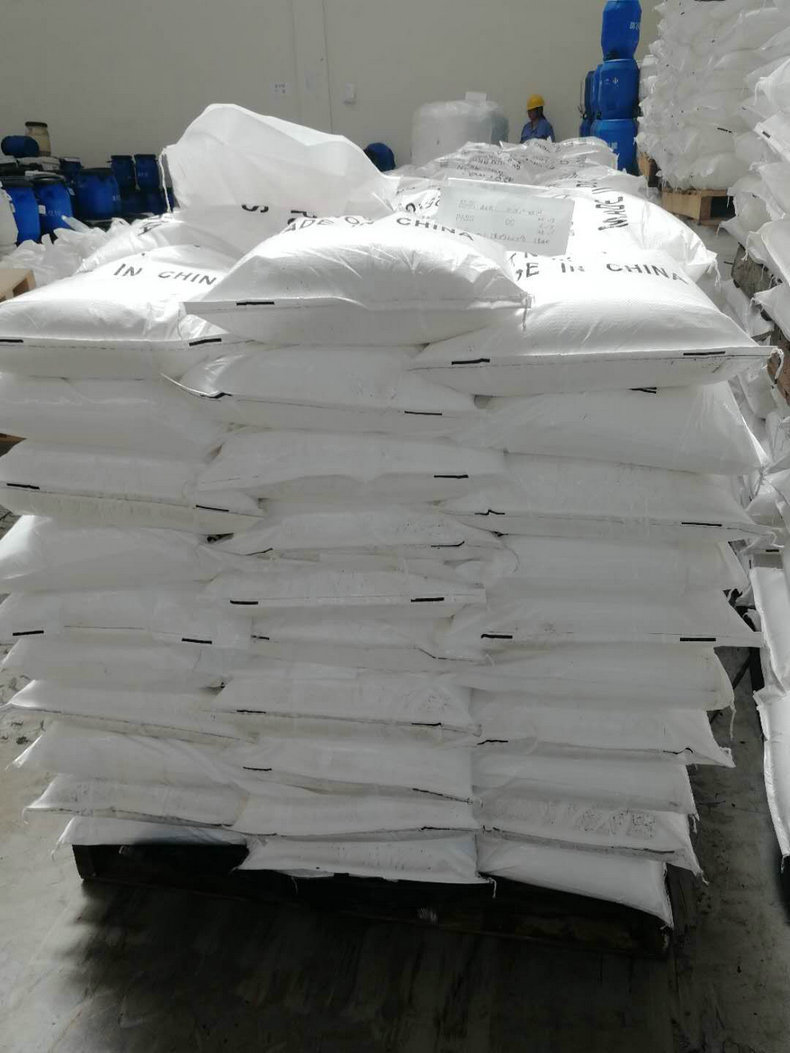
Name: Sodium Bromide, Sodium Bromide. Molecular formula: NaBr, properties: colorless cubic crystal or white granular powder. Odorless, with a salty and slightly bitter taste. Solubility: Easily soluble in water, slightly soluble in alcohol. Density: 3.2 (g/cm3, 25 ℃), Molecular Weight: 102.9, Application: Industrial raw material, widely used in the petroleum industry, sewage treatment, and pharmac

Basic Information
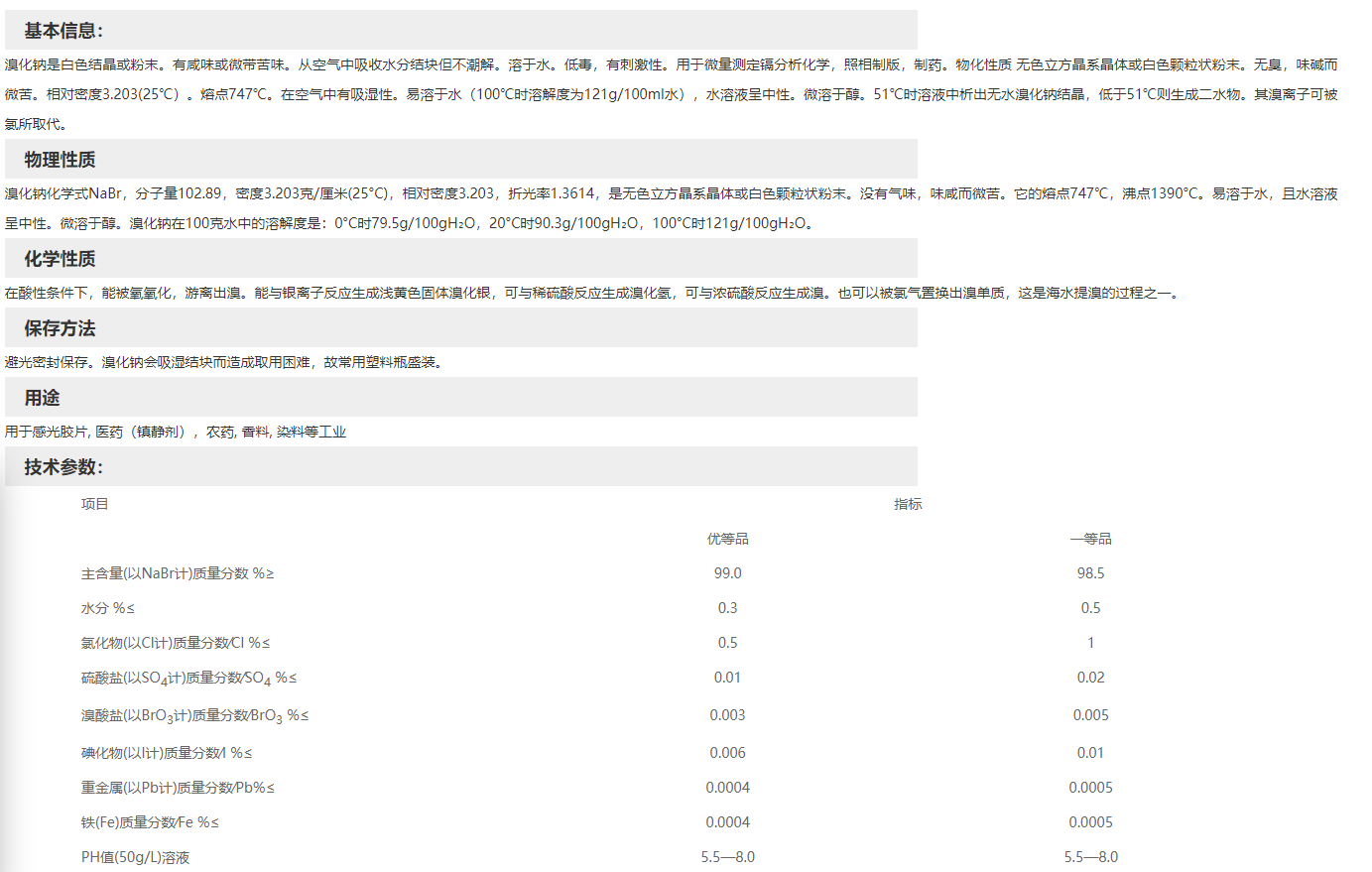
Sodium bromide is a white crystal or powder with a salty or slightly bitter taste. It absorbs moisture from the air but is not easy to deliquesce. It is soluble in water, low-toxic, and irritating. It is used for trace determination of indium iodine analytical chemistry, photoengraving, and pharmaceutical production.
Sodium bromide is a colorless cubic crystal system crystal or white granular powder, odorless, with a salty and slightly bitter taste. Its relative density is 3.203 (25℃), melting point is 747℃, and it is hygroscopic in air. It is easily soluble in water (solubility is 121g/100mL water at 100℃), and the aqueous solution is neutral, slightly soluble in alcohol. Anhydrous sodium bromide crystals precipitate from the solution at 51℃; below 51℃, a dihydrate is formed, and its sodium ions can be replaced by hydrogen.
Physical Properties
The chemical formula of sodium bromide is NaBr, with a molecular weight of 102.89, a density of 3.203g/cm³ (25℃), a relative density of 3.203, and a refractive index of 1.3614. It is a colorless cubic crystal system crystal or white granular powder, with a slight odor and a salty and slightly bitter taste. Its melting point is 747℃, boiling point is 1390℃, and it is easily soluble in water; the aqueous solution is neutral and slightly bitter. The solubility of sodium bromide in 100g of water is: 79.5g/100gH₂O at 0℃, 90.3g/100gH₂O at 20℃, and 121g/100gH₂O at 100℃.
Chemical Properties
Under acidic conditions, it can be oxidized by chlorine to release bromine. It can react with silver ions to form light yellow solid silver bromide, react with sulfuric acid to form hydrogen bromide, react with concentrated sulfuric acid to form bromine, and can also be displaced by chlorine to produce bromine 单质 —this is one of the processes for extracting bromine from seawater.
Storage Method
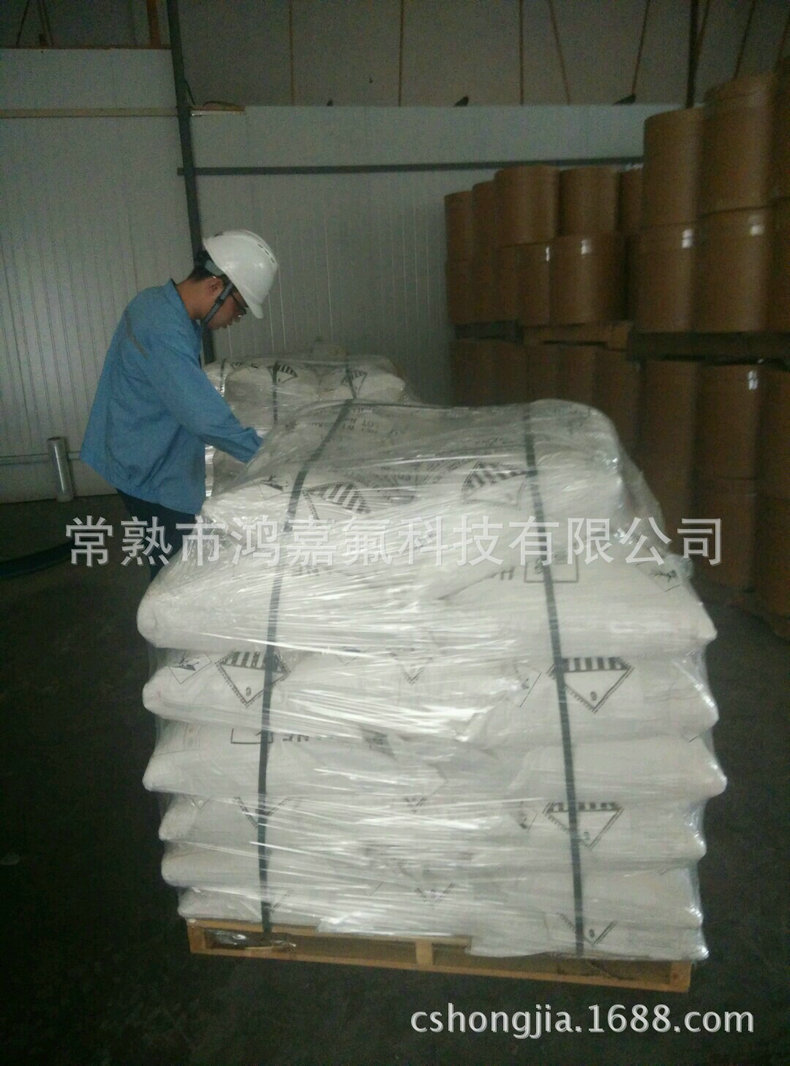
Store in a sealed and light-shielded container. Sodium bromide will absorb moisture and agglomerate, making it difficult to use, so it needs to be stored in a sealed container.
Applications
Used in the industries of photographic film, medicine (sedatives), pesticides, fragrances, dyes, etc.
Technical Parameters: