


You Are Here:Home> Product display
>Fluorinated solvents

Perfluoro(4-methylpent-2ene)
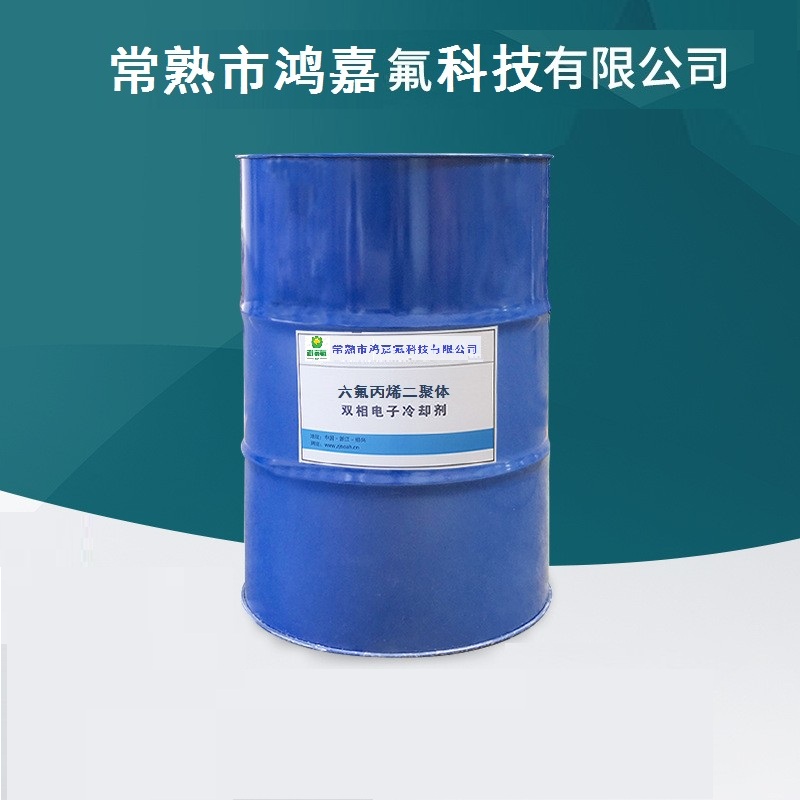
Hexafluoropropylene dimer, chemical name perfluoro (4-methyl-2-pentene). Dual phase immersion electronic coolant, which can be used for cleaning large electrical equipment and data centers, is a commonly used electronic fluorine liquid. Low surface tension, low boiling point. Has good environmental performance, electrical insulation, safety and energy saving.
Product Appearance: Colorless, odorless, transparent liquid
Boiling Point (Atmospheric Pressure): 47℃
Liquid Density (25℃): 1.601g/mL
Dielectric Strength (3mm): 78.9kV
Dielectric Constant (12GHz): 1.88
Resistivity: 3.070×10¹⁵Ω·mm
Surface Tension (25℃): 11.44mN/m
Viscosity (25℃): 0.3562cst
Maximum Operating Temperature: 400℃
ODP : 0
GWP : 20
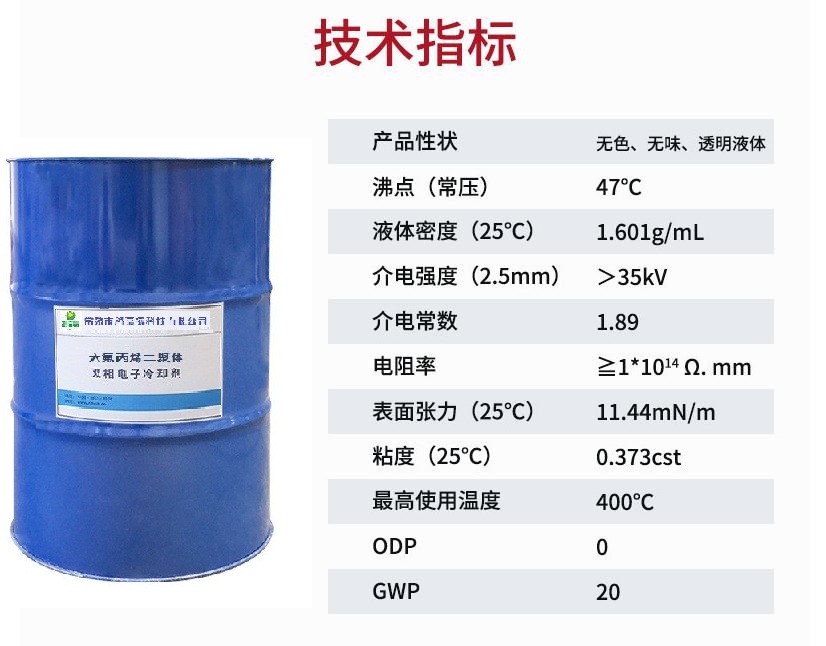
Product Appearance: Colorless, odorless, transparent liquid
Boiling Point (Atmospheric Pressure): 47℃
Liquid Density (25℃): 1.601g/mL
Dielectric Strength (2.5mm): >35kV
Dielectric Constant: 1.89
Resistivity: ≥1×10¹⁴Ω·mm
Surface Tension (25℃): 11.44mN/m
Viscosity (25℃): 0.373cst
Maximum Operating Temperature: 400℃
ODP : 0
GWP : 20
Product Advantages
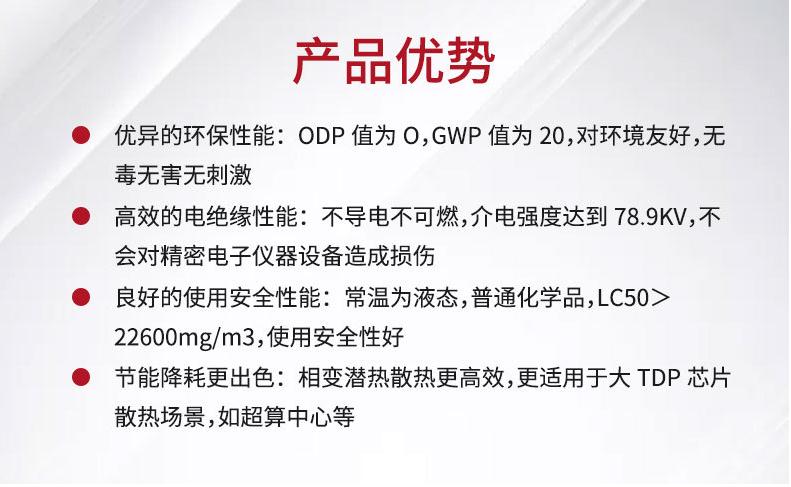
Excellent environmental performance: ODP value is 0, GWP value is 20; it is environmentally friendly, non-toxic, harmless and non-irritating
High-efficiency electrical insulation performance: Non-conductive and non-flammable, with a dielectric strength of 78.9kV, which will not damage precision electronic instruments and equipment
Good safety performance in use: It is liquid at room temperature (a common chemical), with LC50>22600mg/m³, so it has good safety in use
Better energy saving and consumption reduction: Phase-change latent heat dissipation is more efficient, making it more suitable for heat dissipation scenarios of large TDP chips (such as supercomputing centers)
What is Two-Phase Immersion Cooling
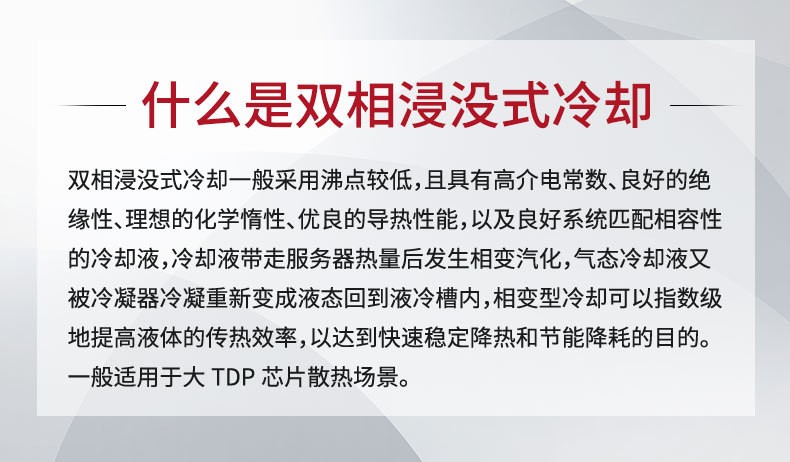
Two-phase immersion cooling generally uses coolants with low boiling points, high dielectric constants, good insulation, ideal chemical inertness, excellent thermal conductivity, and good system compatibility. After the coolant takes away the heat of the server, it undergoes phase change and vaporization; the gaseous coolant is then condensed by the condenser and turns back into liquid to return to the liquid cooling tank. Phase-change cooling can exponentially improve the heat transfer efficiency of the liquid, so as to achieve rapid and stable cooling as well as energy saving and consumption reduction. It is generally suitable for heat dissipation scenarios of large TDP chips.

Prev: Trifluoroaceticacid
Next: Lithium Fluoride
Website Navigation
Contact Us
- Company Address: Fluorination Technology Park, Changshu City, Jiangsu Province
- Service Hotline: 0512-52818267
- Technical Consultation: 0512-52626090
- Contact phone number: 13601573215
- Company email: 13601573215@163.com

Copyright © 2023 Changshu Hongjia Fluorine Technology Co., Ltd All Rights Reserved www.hongjiafu.net 苏ICP备11048419号-2  苏公网安备32058102001807号 Technical Support:Lange
苏公网安备32058102001807号 Technical Support:Lange
+
 wechat number:Zz5203520
wechat number:Zz5203520
 Home
Home
 WeChat
 Tell
Tell